What Is the Importance of a Biomarker Dashboard When It Comes to Hormones and Metabolism?

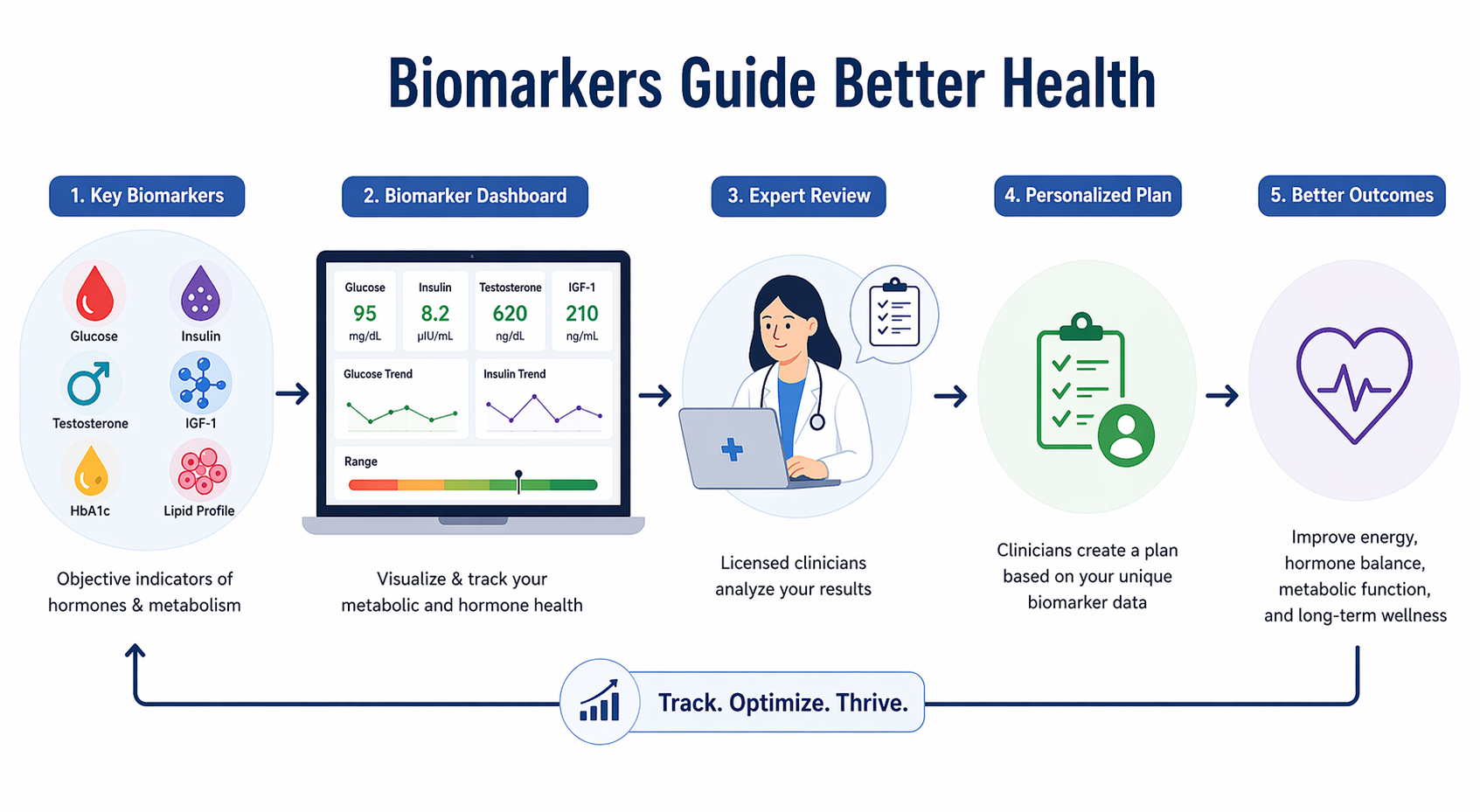
The importance of a biomarker dashboard is clear in relation to metabolic health and hormone optimization in the sense that these two factors are directly related to objective physiologic measures rather than only subjective symptoms. Insulin, glucose, testosterone, and IGF-1 are among the biomarkers that indicate metabolic activity within the human body [1].
At EmbraceRx, the licensed professionals review all biomarker panels as part of their telemedicine service. Through telehealth consultations, the company offers an individual evaluation based on laboratory results. The patient does not have to come in person for the evaluation of metabolic parameters.
How Do Metabolic Biomarkers Reflect Overall Health Status?
Metabolic biomarkers relate to overall health in that they give quantitative evidence on how well the body manages its glucose levels and lipid balance. Biomarkers such as fasting glucose levels, insulin, and hemoglobin A1c measure how effectively nutrients are metabolized in the body and how stable the glucose level is maintained, both of which contribute significantly to metabolic health [2].
Metabolic biomarkers are also useful in diagnosing early-stage metabolic dysregulation. Early warning signs of metabolic dysregulation may not necessarily be observable through other means; thus, the use of metabolic biomarkers makes it possible for clinicians to diagnose metabolic dysregulation at an early stage.
Why Is It Important To Measure Hormone Levels In a Biomarker Dashboard?
It is important because endocrine signaling governs metabolism, body composition, and energy. Testosterone, estrogen, thyroid hormones, and cortisol affect processes like muscle protein synthesis, fat distribution, and metabolic rates. This will give a better understanding of the mechanisms involved in maintaining physiological homeostasis.
In order to have a better appreciation of the relationship between hormone balance and metabolism, it is important to look into their specific functions in various physiological systems:
- Basal metabolic rate regulation: Thyroid hormones regulate the efficiency by which the body uses its energy
- Stress responses: Cortisol affects energy mobilization and physiological reaction to stressful situations
- Anabolic and reproductive functions: Testosterone and estrogen control tissue growth, maintenance, and hormone balance
- Energy partitioning and storage: Hormones control the distribution of nutrients to energy production, fat, or muscle tissue
A slight imbalance in hormones could have an impact on metabolic results. Low testosterone may hinder muscle repair, whereas a change in thyroid activity can lower metabolic rates. With a biomarker dashboard, health professionals would be able to check hormonal trends and see if hormonal imbalance could be affecting metabolic performance.
How does insulin sensitivity affect metabolic efficiency?
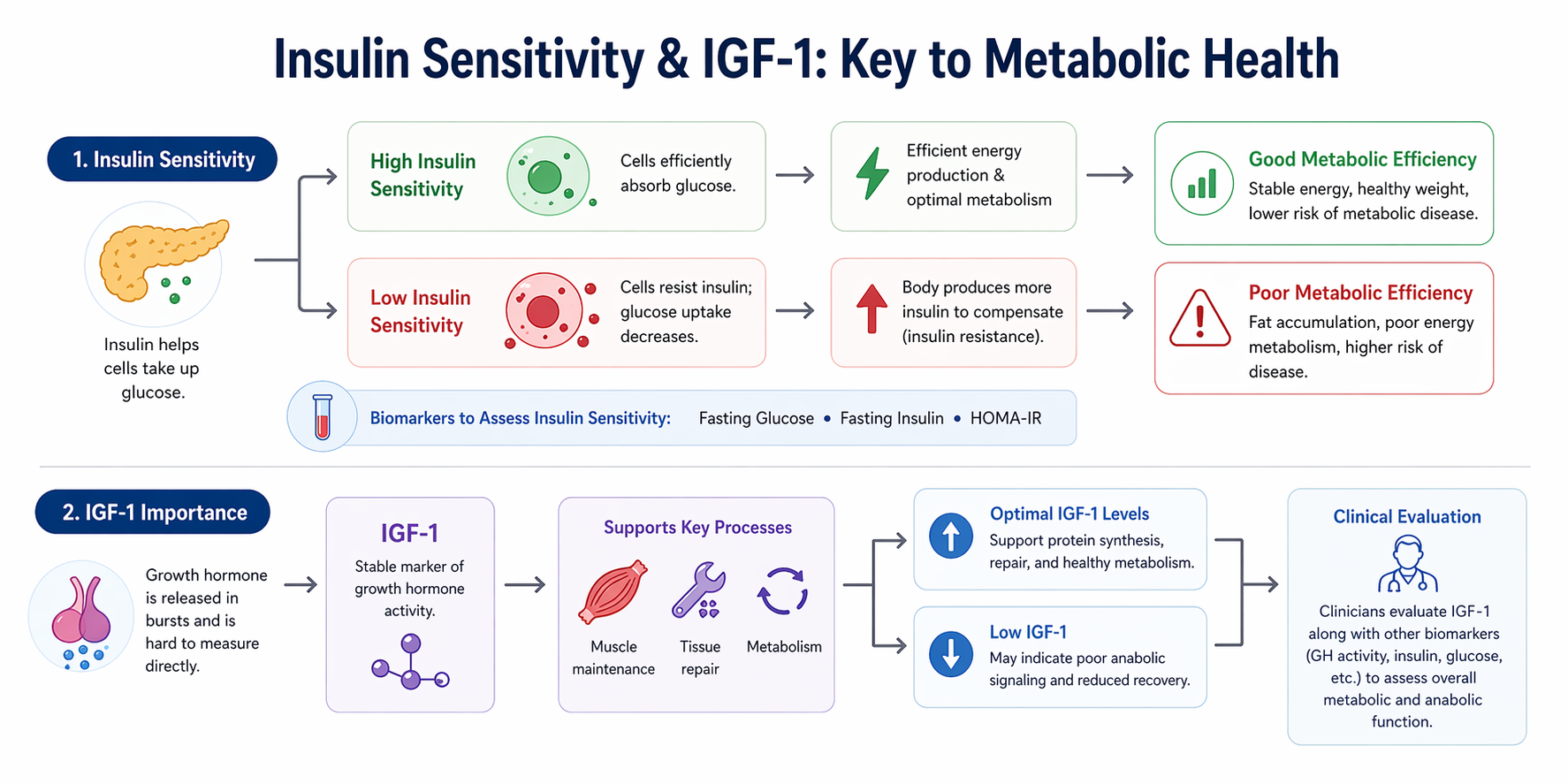
Insulin sensitivity affects metabolic efficiency since the level at which cells become sensitive to insulin in terms of glucose intake determines their metabolic efficiency. When there is high insulin sensitivity, cells become efficient in taking up glucose for metabolism. If insulin sensitivity becomes poor, cells produce excessive insulin in a bid to compensate, thus resulting in metabolic inefficiency [3].
Insulin resistance has been shown to correlate with fat accumulation, poor energy metabolism, and an increased incidence of metabolic diseases. Fasting glucose and insulin levels can be used as biomarkers for assessing insulin sensitivity. Through such assessments, physicians determine whether metabolic processes are working optimally or need to be addressed.
What Makes IGF-1 Such an Important Biomarker for Hormone Optimization?
As a biomarker, IGF-1 is relevant since it is related to growth hormone and serves as a stable marker of growth hormone function involved in processes of repair, muscles maintenance, and metabolism. As noted by one author, growth hormones are released in bursts and cannot be measured directly, making their markers, like IGF-1, essential [4].
An adequate amount of IGF-1 ensures normal protein synthesis, repair processes, and metabolism. Low values can signal poor anabolic signaling, whereas high values may need further analysis to determine if anabolic pathways are working properly and do not pose any harm to one's metabolism.
In the course of clinical examination, clinicians analyze not only IGF-1 values but also other biomarkers, like growth hormone activity, insulin, and others. This way, it is possible to assess if one's anabolic signaling system works appropriately in terms of overall metabolic function.
How do lipid profiles help the biomarker dashboard?
The contribution of lipid profiles to the biomarker dashboard is that they offer valuable information on fat metabolism and heart risks. Metabolic markers like LDL cholesterol, HDL cholesterol, and triglycerides show the level of lipid transport and usage, as fats play an important role in energy production and the synthesis of hormones.
In order to be able to better understand lipid metabolism, there are certain elements of lipid profiles examined by doctors:
- Levels of LDL cholesterol: Related to lipid transport and cardiometabolic risk if high
- Levels of HDL cholesterol: Involved in reverse cholesterol transport with a positive impact on metabolic state
- Level of triglycerides: Indicate fat circulation and energy storage
- Lipid ratio (e.g., LDL/HDL): Give more details regarding the overall cardiometabolic profile
An abnormal amount of lipids may mean metabolic issues or a problem with fat metabolism. High triglyceride levels or low HDL levels indicate an increase in cardiometabolic risk.
Who Is a Candidate for a Biomarker Dashboard Evaluation?
A biomarker dashboard evaluation can be helpful for people who want to learn about their metabolism and hormonal levels based on scientific information. This evaluation will be ideal for patients who are feeling extreme tiredness, struggling with weight management, and experiencing issues with their hormones.
Biomarker testing is recommended for those who want to pursue preventive medicine, performance enhancement, or telemedicine care under medical supervision. Clinical assessment will help find out whether the metabolism and hormones are affecting general well-being and what steps to take next.
Mechanistic Outcome: The Reasoning Behind the Effectiveness of Biomarker Testing
Biomarker testing offers a means of quantitatively assessing the workings of metabolic and endocrine pathways. These biomarkers represent the interplay of glucose metabolism, hormonal signaling, lipids, and inflammatory processes that influence one’s general state of well-being.
As metabolic well-being is controlled through the interplay of physiological systems, a full biomarker panel helps healthcare professionals detect any imbalances and undertake necessary measures. The practice of evidence-based medicine thus depends on accurate information for ensuring safe and effective approaches.
Evidence-Based Care at EmbraceRx
Patients are frequently subjected to generic health information that does not take into account their personal biochemical makeup and hormone fluctuations. In the absence of specific biomarker information, it becomes challenging to provide targeted treatments and resolve any physiological imbalance issues.
EmbraceRx has licensed physicians who conduct comprehensive tests on your biomarkers using secure telemedicine visits. This enables you to get tailored recommendations based on lab results. People interested in physician-directed metabolic medicine can reach out to our clinical care team.
FAQs
What is a biomarker dashboard in telehealth?
Biomarker dashboard involves an assessment of the patient's metabolism and physiology through laboratory tests. These results are used by practitioners in the telehealth practice setting to offer customized treatment plans based on objective medical findings.
Why is biomarker testing important for hormone optimization?
Biomarker testing is significant for hormone optimization since this process involves measurements of the physiological functions of hormones. Test results can be utilized by doctors to measure the physiological effects of the hormones including testosterone, estrogen, and thyroid hormones.
Can biomarker testing detect early metabolic issues?
Yes, through biomarker tests, it is possible to diagnose metabolic disorders even in the absence of clear symptoms. Fluctuations in insulin level, blood sugar concentration, or lipids could signal an underlying metabolic disorder. Identifying such an imbalance early will facilitate prompt treatment, potentially stopping further complications from occurring.
How often should biomarkers be monitored?
The frequency at which biomarkers need to be tested differs from person to person, depending on individual medical needs. Generally, the recommended frequency involves testing to monitor changes in hormonal or metabolic balance.
References
- Wang TJ. Assessing the role of biomarkers in clinical practice. Circulation. 2011.
- American Diabetes Association. Standards of Medical Care in Diabetes. Diabetes Care. 2023.
- Roberts, Christian K et al. “Metabolic syndrome and insulin resistance: underlying causes and modification by exercise training.” Comprehensive Physiology vol. 3,1 (2013): 1-58.
- Clemmons, David R. “Role of IGF-I in skeletal muscle mass maintenance.” Trends in endocrinology and metabolism: TEM vol. 20,7 (2009): 349-56.