

When GLP-1, HRT, and Peptides Work Together
GLP-1 therapies, hormone replacement therapy (HRT)[1], and peptide-based treatments interact through metabolic and endocrine pathways that regulate glucose metabolism, fat storage, and hormonal signaling. GLP-1 receptor agonists[2] improve insulin secretion and reduce appetite, while HRT influences fat distribution and metabolic regulation, creating complementary physiological effects.
Patients exploring advanced metabolic and hormonal therapies often need professional support to understand how these treatments work together. EmbraceRx provides personalized healthcare guidance and treatment support, helping individuals explore integrated approaches that combine metabolic therapies, hormone balance strategies, and modern peptide-based care. To learn more about available programs or speak with a specialist, visit our Contact Us page.
How Do GLP-1 Therapies Influence Metabolism?
GLP-1 therapies influence metabolism by regulating energy balance, hormone secretion, and appetite control. Research investigating the effects of GLP-1 infusion in healthy adults found that this hormone can alter metabolic activity after food intake. Specifically, GLP-1 reduced diet-induced thermogenesis and carbohydrate metabolism[3] oxidation, suggesting that the body may process nutrients differently during GLP-1 activity.
The study also observed that GLP-1 suppressed several circulating hormones and metabolic substrates while reducing the desire to eat various types of foods after a meal. These effects indicate that GLP-1 therapies may influence metabolic regulation not only by modifying nutrient absorption and energy expenditure but also by decreasing appetite and supporting overall metabolic balance.
In particular, researchers identified several key metabolic effects:
- Reduced diet-induced thermogenesis, meaning the body produces less heat and energy after meals.
- Lower carbohydrate oxidation indicates changes in how the body utilizes glucose for energy.
- Suppression of circulating metabolic hormones, which may help stabilize metabolic activity.
- Decreased appetite and food desire, especially after meal consumption.
Overall, these findings suggest that GLP-1 therapies support metabolic health through multiple pathways. They influence how the body uses energy, regulate hormone signaling, and reduce appetite, all of which contribute to improved metabolic control.
How Does Hormone Replacement Therapy Support Metabolic Health?
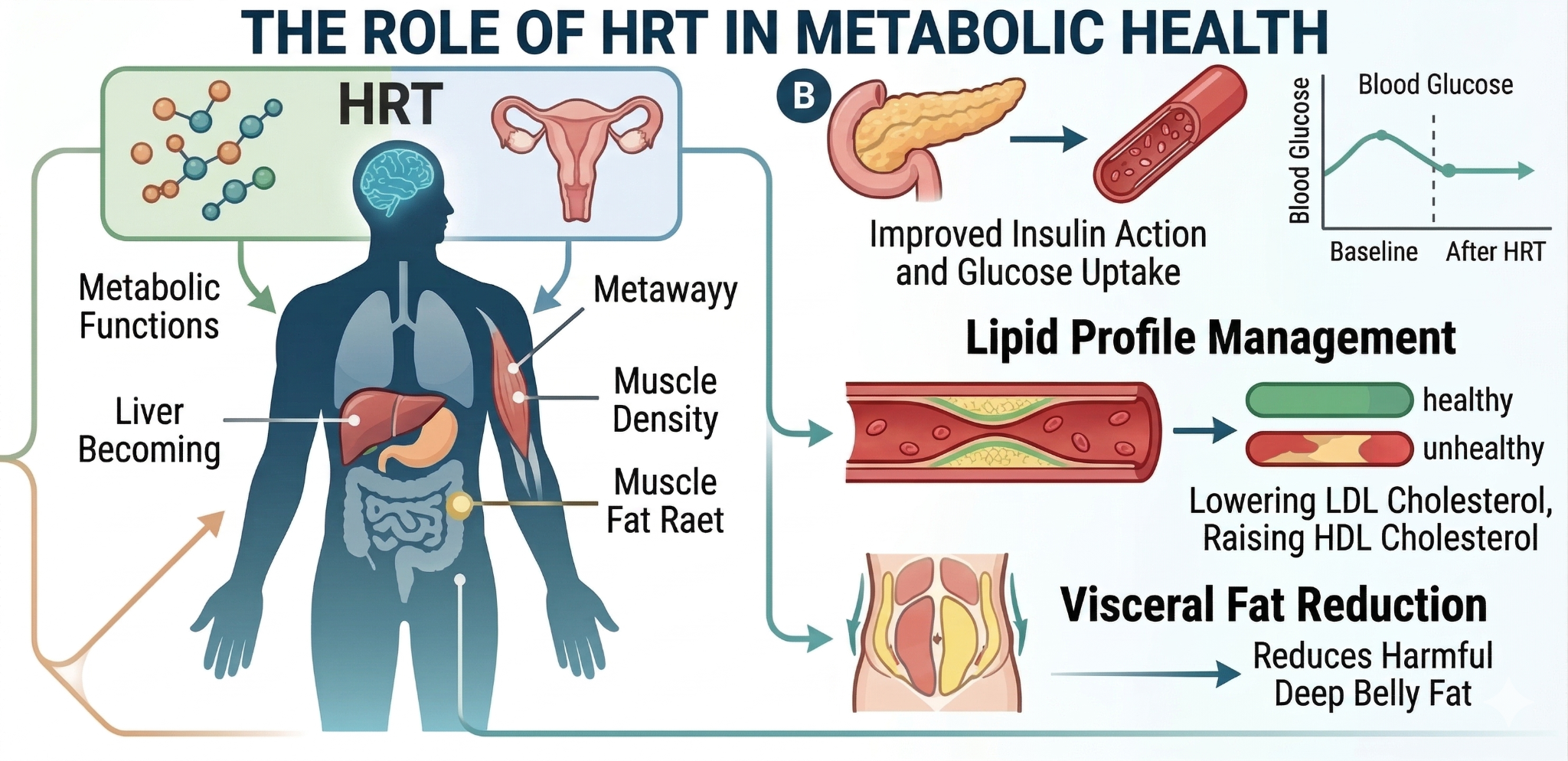
Hormone replacement therapy (HRT) can support metabolic health by improving lipid profiles and regulating glucose metabolism in postmenopausal women. Research analyzing national health[4] data found that women using HRT often showed healthier cholesterol levels and better metabolic markers compared with those who had never used hormone therapy.
The study also observed that postmenopausal women with diabetes who used HRT had improved glycemic control and more favorable lipoprotein levels than nonusers. These findings suggest that hormone therapy may contribute to improved metabolic regulation by supporting balanced cholesterol levels, insulin activity, and overall glucose metabolism.
Can GLP-1 and HRT Work Together in Metabolic Studies?
Yes, GLP-1 therapies and hormone replacement therapy (HRT) can work together in metabolic studies because both influence key metabolic pathways that regulate appetite, glucose control[5], and energy balance. Research shows that GLP-1 receptor agonists improve insulin sensitivity and reduce appetite, while HRT helps restore hormonal balance that affects metabolism and fat distribution. When studied together, scientists observe interactions in important tissues such as the liver, adipose tissue, and the central nervous system.
Both therapies can influence how the body processes nutrients and regulates insulin activity. GLP-1 therapies primarily support glucose control and appetite regulation, while hormone replacement therapy may help restore hormonal balance that affects fat distribution, lipid metabolism, and energy levels. Together, these effects may contribute to improved metabolic function in certain individuals.
However, combining multiple metabolic therapies without proper medical supervision can create uncertainty about treatment effectiveness and safety. Patients may find it difficult to understand how different therapies interact within the body. Professional guidance can help evaluate individual health conditions and determine whether combining these approaches may provide appropriate metabolic and hormonal support.
What Role Do Peptides Play in Combined Hormonal Therapies?
Peptides act as important biological signaling molecules that help regulate many physiological processes in the human body. They influence metabolism, hormone communication, cellular repair, and energy balance[6].In medical research, peptide-based therapies are studied for their ability to target specific metabolic pathways, support endocrine function, and enhance hormonal regulation. Because peptides can interact with receptors in different tissues, they may help coordinate communication between metabolic systems and hormonal networks, making them valuable components in advanced therapeutic strategies.
1- Supporting Metabolic Signaling
Peptides play a role in regulating metabolic signaling pathways that control glucose metabolism, appetite regulation, and fat utilization. By influencing hormone-sensitive tissues such as the liver, pancreas, and adipose tissue, peptide-based therapies may help support metabolic balance when used alongside other hormonal treatments.
2- Enhancing Hormonal Communication
Many peptides function as messengers between organs and endocrine glands. These signaling molecules can influence how hormones are produced, released, and utilized within the body. In combined hormonal therapies, peptides may help improve communication between metabolic and hormonal systems, contributing to more coordinated physiological responses.
At EmbraceRx, we help individuals explore personalized metabolic and hormonal care strategies designed to support overall health and balance.
Advanced Hormonal and Metabolic Solutions with EmbraceRx
Many individuals struggle with complex metabolic and hormonal imbalances that affect energy levels, weight regulation, and overall wellbeing. When therapies such as GLP-1 treatments, hormone replacement therapy, and peptide-based approaches are considered together, understanding how these treatments interact can be challenging without proper medical guidance. Patients may feel uncertain about which therapies are appropriate and how they can work together safely.
EmbraceRx helps address these challenges by providing access to professional healthcare guidance and personalized treatment strategies. Through expert evaluation and modern digital healthcare services, EmbraceRx supports individuals in exploring integrated approaches that combine metabolic care, hormone balance therapies, and peptide-based treatments designed to improve long-term health outcomes.
FAQs
What is GLP-1 therapy?
GLP-1 therapy refers to medications that mimic the glucagon-like peptide-1 hormone, which regulates insulin release and appetite. These treatments are commonly used to manage type 2 diabetes and support weight management by improving blood glucose control.
Can GLP-1 medications be combined with hormone therapy?
Yes, some studies suggest GLP-1 therapies and hormone replacement therapy may influence similar metabolic pathways. When supervised by healthcare professionals, these treatments may complement each other and help support metabolic balance and hormonal health.
What are peptide therapies in metabolic medicine?
Peptide therapies involve biologically active molecules that regulate physiological functions such as metabolism, hormone signaling, and cellular communication. Researchers continue to study peptides for their potential roles in metabolic regulation and endocrine health.
Why is medical supervision important when combining therapies?
Combining treatments such as GLP-1 therapies, hormone replacement therapy, and peptide-based approaches requires medical supervision. Healthcare professionals evaluate patient history and treatment goals to ensure therapies are used safely and effectively.