

Should You Add Peptides to Your Wellness Routine? Pros & Cons

Yes, peptides can offer real benefits in a wellness routine, including support for skin health, muscle recovery, and metabolic balance, but only when used correctly and responsibly. These small chains of amino acids act as messengers in the body, influencing cell repair, inflammation, and hormone activity. Research published by the National Institutes of Health (NIH) 1 and PubMed Central 2 highlights their therapeutic potential across various domains, from anti-aging skincare to athletic performance.
At NUVAMED, we drive scientific discovery with high-purity, research-grade peptides crafted under strict GMP standards and verified through third-party testing. Every compound is batch-traceable, lab-validated, and formulated exclusively for controlled research environments. Whether your focus is cellular repair, hormone pathways, or metabolic function, our curated catalogue ensures precision, consistency, and confidence in every study.Shop now and experience the NuvaMed standard where science meets integrity.
What Are the Potential Benefits of Peptides in a Wellness Routine?
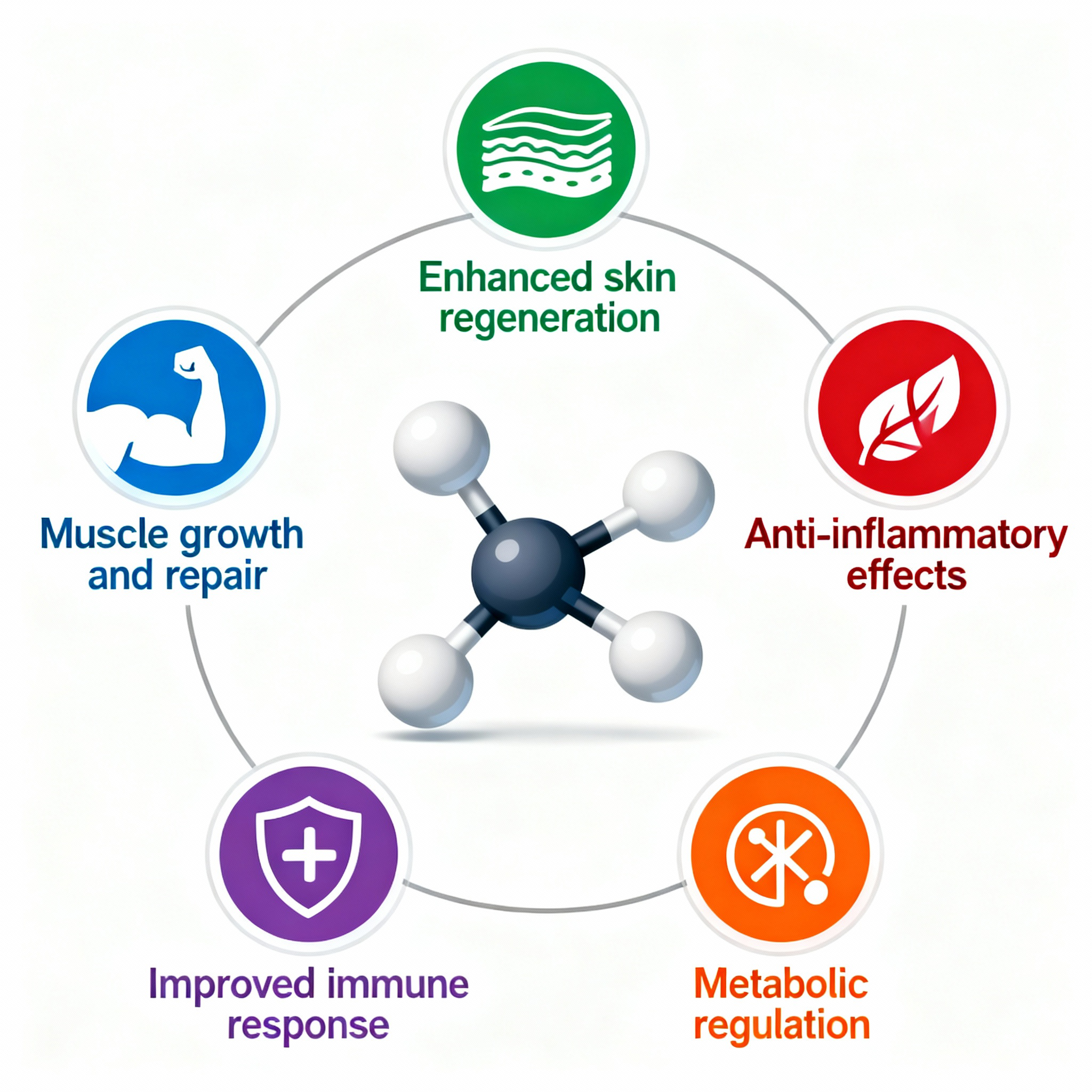
Peptides can support muscle growth, skin rejuvenation, fat metabolism, cognitive clarity, and hormone balance, but only when used responsibly and sourced from high-purity materials. These short chains of amino acids act as biological messengers, triggering specific functions that are essential to overall wellness. Let's understand the potential benefits in more detail:
1. Muscle Growth and Recovery
Peptides such as GHRP-6 and Ipamorelin stimulate the release of natural growth hormone, which plays a crucial role in muscle repair and the development of lean tissue. Studies 3 in sports science and regenerative medicine show improved recovery times and increased endurance in test models using growth hormone-releasing peptides.
2. Skin Health and Anti-Aging
Collagen-boosting peptides such as Matrixyl and copper peptides support dermal structure, elasticity, and hydration. Clinical studies have shown that consistent use of topical peptides can help reduce the appearance of fine lines and improve skin barrier function. According to research 4 published in the Journal of Cosmetic Dermatology, these effects are measurable in controlled environments and linked to increased collagen synthesis.
3. Weight Management and Metabolic Support
Specific peptides, such as AOD-9604 and 5-Amino-1MQ, are being researched for their ability to enhance fat breakdown and metabolic activity. While these peptides are not approved for therapeutic use, the Therapeutic Goods Administration (TGA) 5 in Australia highlights the growing interest in peptides for weight loss studies, emphasising the importance of regulated, research-based application.
4. Improved Sleep and Cognitive Support
Peptides like DSIP (Delta Sleep-Inducing Peptide) may influence neurotransmitter activity and stress hormones, such as cortisol, promoting better sleep cycles and mental clarity. Preliminary findings in neuroscience suggest potential for enhanced REM cycles and reduced sleep latency in experimental models.
5. Hormone Regulation
Peptides such as Tesamorelin and Kisspeptin are actively studied for their effects on hormonal signalling. Tesamorelin, for example, is FDA-approved for managing HIV-related fat distribution and shows promise in broader metabolic regulation.
What Are The Risks and Drawbacks of Peptides?
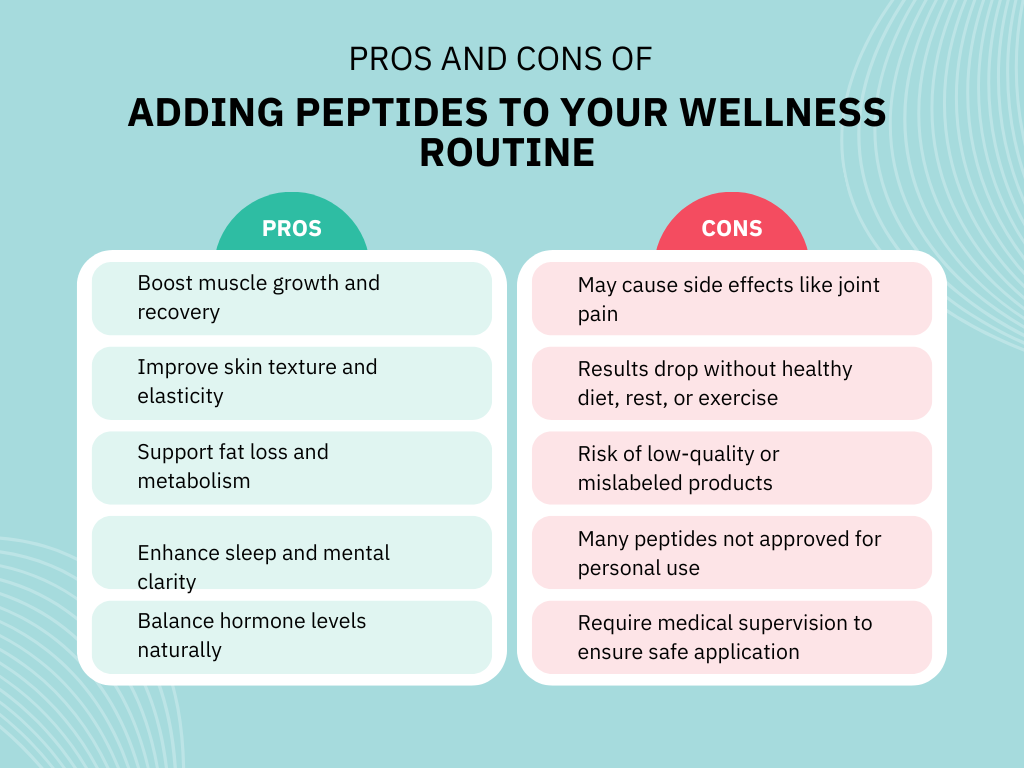
Peptides carry risks including potential side effects, legal uncertainties, and the dangers of poor-quality or misused products. While they offer promising wellness applications, these benefits can quickly be outweighed when peptides are misused, sourced from unverified vendors, or used without proper guidance and supervision. Below, we break down the key concerns every user or researcher should understand before incorporating peptides into any routine:
1. Potential Side Effects
Although generally well-tolerated in research settings, peptides can lead to adverse effects, including water retention, increased hunger, joint pain, numbness, or changes in insulin sensitivity. Some growth hormone-stimulating peptides may also disrupt the endocrine system when misused. The U.S. National Library of Medicine 6 notes that the long-term safety of many peptides remains under investigation, and self-administration without clinical guidance poses unnecessary health risks.
2. Quality Concerns and Legal Grey Areas
The market is flooded with unregulated peptide products that lack quality control, proper labelling, or third-party verification. Many online platforms sell peptides labelled “for research only.” Still, these are often diverted for unauthorised human use, an issue highlighted by the U.S. Food and Drug Administration (FDA) 7 , which warns that compounded or mislabeled peptides may pose serious risks due to inconsistent purity or dosage.
3. Misuse or Overreliance
Peptides are not magic solutions. Overreliance on them without addressing lifestyle, nutrition, or underlying health conditions may lead to disappointing results. Furthermore, inappropriate dosing, stacking, or off-label use, especially without expert guidance, can strain hormone pathways and disrupt natural physiological balance.
Responsible research starts with responsible sourcing.
At NuvaMed, we provide research-grade peptides that meet the highest standards of purity, consistency, and compliance. Each batch undergoes rigorous third-party testing and quality control to ensure precision and reproducibility in every application. Our peptides are GMP-compliant, traceable, and supported by comprehensive documentation. Whether you're exploring cellular signalling, tissue repair, or metabolic function, NuvaMed is your trusted partner in scientific advancement.
How to Use Peptides Safely
To use peptides safely, they must be sourced from verified suppliers, handled according to established research protocols, and used only under the proper supervision of a qualified medical professional. Avoid over-the-counter or unregulated peptide products, as they often lack purity, quality control, and adherence to legal regulations. Peptides are potent compounds that influence cellular function and hormonal balance. To ensure safe and effective use, consider the following key guidelines before incorporating them into any research or wellness routine.
1. Prescription vs. Over-the-Counter Peptides
While some peptides are FDA-approved for specific medical uses (like Tesamorelin for HIV-related lipodystrophy), many others are not authorized for human use and should only be used in controlled laboratory environments. Purchasing peptides from unregulated online sources without a prescription is not only unsafe, but it may also be illegal. According to the U.S. Drug Enforcement Administration (DEA) 8 , distributing or misusing research chemicals without proper authorization can carry legal consequences.
2. Importance of Third-Party Testing
One of the most effective ways to ensure safety is by choosing peptides that have been third-party tested for purity and composition. Independent lab verification ensures that the compound contains what it claims, free from contaminants or impurities. Products lacking transparent documentation or a certificate of analysis (COA) should be avoided in any research setting.
3. Consult Healthcare or Research Professionals
Even if peptides are intended for experimental use only, it’s critical to consult with qualified professionals, such as a physician, pharmacist, or scientific advisor. They can help assess risks, review research goals, and ensure that dosing and handling align with ethical and safety standards. Misinterpretation of dosing protocols or storage instructions can compromise data quality or pose safety risks to lab personnel.
At NuvaMed, we prioritise peptide safety by offering only GMP-compliant, research-only compounds supported by third-party lab testing and full traceability. Whether you're exploring hormonal pathways or regenerative models, our catalogue is built for precision and scientific integrity, ensuring that safety and results go hand in hand.
Are Peptides Right for You?
Yes, peptides may be right for you if you’re involved in legitimate research or under professional medical supervision, but they’re not for casual or unsupervised use. While peptides offer promising benefits from muscle recovery to anti-aging support, their effects are highly dependent on purity, dosage, and individual health factors. Misuse or sourcing from unverified sellers can lead to serious complications or ineffective outcomes.
To weigh the pros, peptides can support metabolic function, improve tissue regeneration, and enhance cognitive or hormonal pathways. The cons include potential side effects, uncertain long-term safety data, and legal limitations around personal use. The European Medicines Agency (EMA) 9 emphasises the importance of controlled environments when working with bioactive compounds, particularly those in the developmental or research phases.
NUVAMED Peptides: Trusted Quality for Smarter Wellness Choices
Exploring peptides for wellness, fitness, or skincare? Your results start with the quality of your source. Unverified or low-grade peptides can lead to disappointing outcomes or even unwanted side effects. That’s why choosing a trusted supplier is essential.
Shop now at NuvaMed, where every peptide is crafted with science-backed precision and tested to the highest standards. Our compounds are GMP-compliant, third-party verified, and batch-traceable, providing you with confidence in the products you use. Whether you're just getting started or refining your regimen, NuvaMed delivers purity, consistency, and results you can trust.
Frequently Asked Questions
What are peptides, and how do they work in the body?
Peptides are short chains of amino acids that act as messengers in the body, triggering various biological functions like tissue repair, hormone regulation, and collagen production. When introduced properly, they can support muscle growth, skin health, and metabolism, making them a popular tool in wellness and research-based supplementation.
What are the main benefits of using peptides?
Peptides may support muscle recovery, skin rejuvenation, fat metabolism, cognitive performance, and hormone balance. Their targeted action makes them valuable in both therapeutic and research settings. For wellness-focused routines, peptides must be selected and dosed responsibly to achieve measurable and safe results.
Can peptides help with weight loss and fat burning?
Yes, specific peptides, such as AOD-9604 and 5-Amino-1MQ, are studied for their benefits in fat metabolism and weight management. These peptides may stimulate lipolysis and metabolic activity. However, they are not FDA-approved for public use and should only be explored in research settings or clinical trials.
Are there side effects associated with peptides?
Possible side effects of peptides include water retention, joint pain, increased hunger, or hormonal imbalances. The risk increases when using low-quality or misused compounds. Always source peptides from GMP-certified labs and use them only in laboratory research or medically supervised environments.
References
7- U.S. Food and Drug Administration (FDA). Peptides and Compounded Drugs. Published 2025.
9- European Medicines Agency (EMA). Multidisciplinary guidelines.
.