
How Do Testosterone Test Results Reflect Hormonal Health and Metabolic Function?
The condition of hormone balance is reflected in the testosterone test results, which depend on the concentration of the hormone in the blood. The determination of the amount of free testosterone and its binding proteins allows one to assess the hormone concentration needed for physiological processes and metabolic balance in various systems [1].
Testosterone testing outcomes at EmbraceRx are analyzed by board-certified doctors through telemedicine appointments. Clinical interpretations of hormone test outcomes are conducted by licensed physicians. This enables patients to comprehend the link between hormone biomarker findings and metabolism, energy, and endocrine system performance.
What Is the Difference Between Total and Free Testosterone?
The total testosterone concentration is measured in blood and denotes the total quantity of the hormone present in the circulation system, whether bound or free. On the other hand, free testosterone is the amount of the hormone that is not protein-bound and hence capable of interacting with body tissues for metabolism [2].
Since most testosterone molecules are bound to SHBG or albumin, just the measurement of total testosterone might not provide enough information about the hormone's biological activity. Testing the level of free testosterone will help gain a clearer understanding of the amount of the hormone that can be used by cells.
How Do Normal Testosterone Levels Vary by Age?
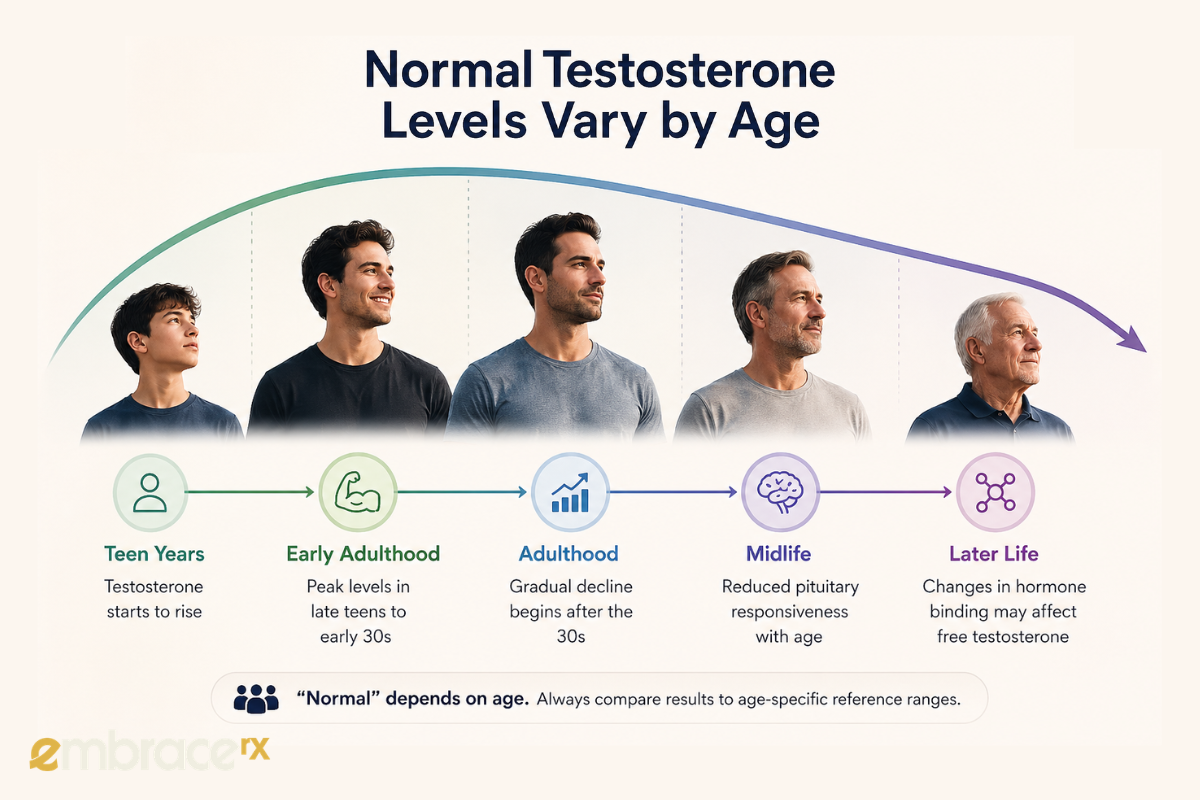
Normal testosterone levels vary by age because endocrine function changes over time due to physiological aging and alterations in hypothalamic–pituitary signaling. Testosterone levels typically peak in early adulthood and gradually decline with age, reflecting changes in hormone production and metabolic activity [3].
Key age-related patterns in testosterone levels include:
- Peak levels in early adulthood: Highest concentrations typically occur between late teens and early 30s
- Gradual decline with aging: Testosterone levels decrease progressively after the third decade of life
- Reduced pituitary responsiveness: Aging affects signaling between the hypothalamus and pituitary gland
- Changes in hormone binding: SHBG levels may increase with age, affecting free testosterone availability
Reference ranges are adjusted to account for these variations, meaning what is considered “normal” depends on age and laboratory standards. Interpreting results requires comparing measured values with age-specific ranges rather than using a single universal threshold for all individuals.
What Role Does SHBG Play in Testosterone Test Results?
It is essential for understanding the results of testosterone tests due to its ability to control the activity of the hormone by binding with it. As a result, not all testosterone is capable of interacting with tissue cells due to SHBG's regulation. Thus, variations in SHBG concentrations might affect testosterone activity [4].
If the concentration of SHBG is high, there may be a reduced amount of biologically available testosterone despite the seemingly normal level of total testosterone. If the concentration of SHBG is low, there will be an increased level of biologically available hormones.
SHBG concentrations depend upon many physiological and metabolic factors such as age, liver condition, thyroid activity, and insulin sensitivity. For instance, increased SHBG concentrations can occur in older patients or individuals with hyperthyroidism, whereas decreased concentrations can be found in patients who have insulin resistance or are obese. The determination of SHBG concentration is helpful for assessing its metabolic effects.
How Do Testosterone Levels Affect Metabolic Health?
Testosterone levels are linked with metabolism since the hormone helps to control muscle protein synthesis, fat distribution, and insulin resistance. Sufficient testosterone ensures the development of lean muscles as well as proper metabolism, while low levels can cause metabolic imbalance [5].
Key metabolic effects influenced by testosterone include:
- Muscle protein synthesis: Supports maintenance and growth of lean muscle mass
- Fat distribution: Helps regulate adipose tissue storage, particularly visceral fat
- Insulin sensitivity: Improves glucose uptake and metabolic efficiency
- Energy utilization: Enhances mitochondrial function and overall energy production
Testosterone deficiency is linked to fat deposition, muscle atrophy, and metabolic inefficiency. Through evaluating testosterone concentrations together with metabolic indicators, doctors will be able to determine the influence of endocrine activity on metabolic health and physical functioning.
When Should You Consider a Testosterone Blood Test?
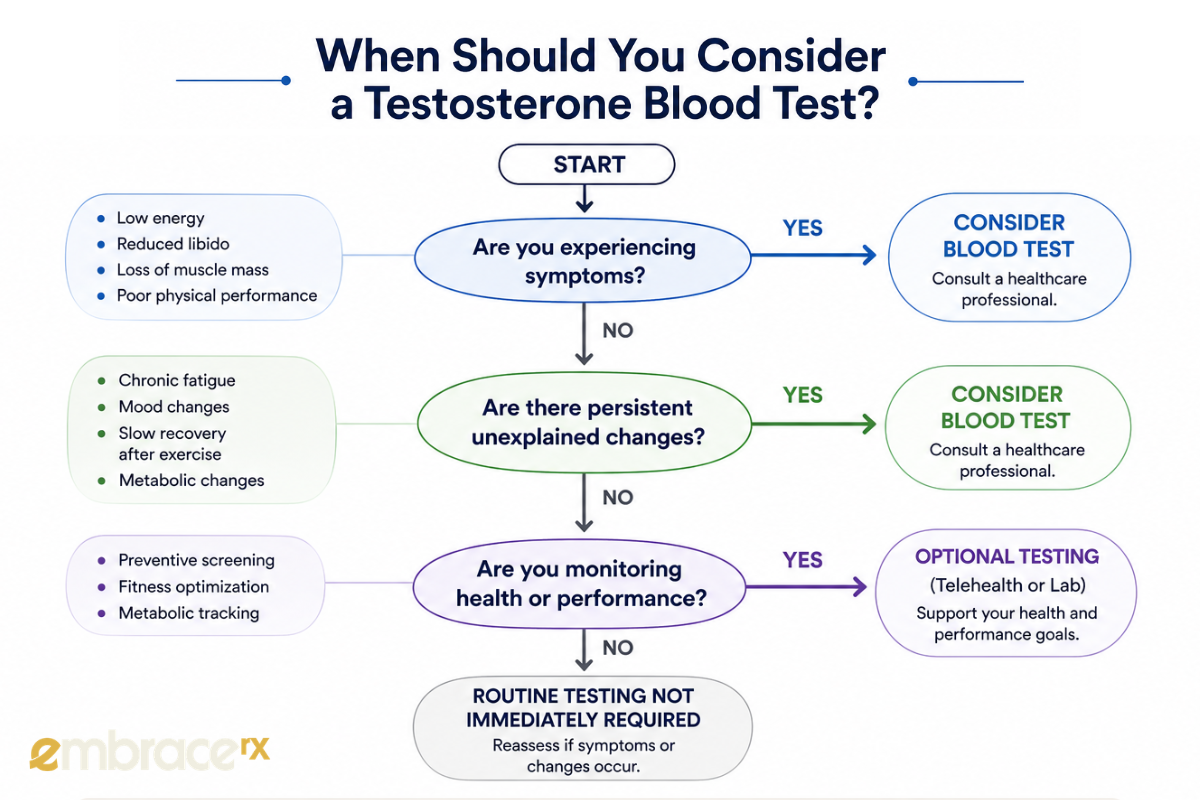
Testosterone level determination via blood tests may be necessary if there are signs that indicate that hormones have an influence on metabolic functions, and there is some kind of hormonal disorder. The signs may be in the form of low energy, body changes, poor physical performance, lack of libido, and inability to maintain muscle mass.
Other factors which could lead to a test being carried out might be constant fatigue, mood alteration, less recovery during exercise, or metabolic alterations for unknown reasons. Telehealth hormone testing would be beneficial not only in preventive care, performance assessment, and metabolism tracking but also in establishing if there is a need to conduct tests in laboratories.
Mechanistic Conclusion: Why Testosterone Test Interpretation Requires Clinical Context
Interpretation of the testosterone testing results is complicated by the interplay between hormones, binding protein, and metabolic regulation. The interpretation of these tests should be considered based on the interaction of all three types of testosterone (total, free, and SHBG). They are not working alone but have an impact on various bodily functions.
Hormone levels are affected by numerous physiologic determinants like age, metabolism, liver functioning, and endocrine feedback loops, making clinical judgment necessary for proper interpretation. Telemedicine services offer an effective way of evaluating these hormones through the integration of lab results with medical knowledge, ensuring that the data obtained can be effectively used for health assessment.
Evidence-Based Care at EmbraceRx
In many cases, patients receive lab values in isolation, where it becomes difficult for them to interpret them clinically, especially when there is a need to determine what they mean regarding their hormones. It could become even more challenging without any professional intervention to ascertain the difference between variation and an endocrine problem.
EmbraceRx offers test results analysis by licensed doctors via telemedicine appointments using a systematic approach to analyzing your testosterone levels. Patients get scientifically sound interpretations regarding their hormone levels and biomarker interplay, as well as any implications for metabolism. This enables patients to have a clear understanding of their testosterone results.
FAQs
What is a normal testosterone level?
A normal testosterone level can depend upon many factors, such as age and even the standards set by each laboratory for testing. Normal levels will be based on comparisons to specific ranges and the other associated hormone levels. An individual value is never considered alone.
What is the difference between total and free testosterone?
Total testosterone refers to all the hormones present in the body, while free testosterone indicates the active hormone level available to body tissues. Total testosterone may be in the normal range, but free testosterone may be low because of high levels of binding proteins.
Can testosterone levels affect metabolism?
Yes, there is evidence that testosterone affects muscle mass, body fat, and insulin sensitivity. Variations in testosterone may affect metabolic efficiency and body composition. Analysis of both hormone and metabolic biomarker levels will help to understand their effects on general health.
Can I have my testosterone levels checked by using telehealth services?
A testosterone level check can be performed through telehealth services. Qualified professionals will diagnose your symptoms, perform appropriate tests, and analyze the findings for you. In this way, you can get precise hormone analysis without having any in-person consultations.
References
- Bhasin S, et al. Testosterone therapy in men with hypogonadism: Endocrine Society clinical practice guideline. J Clin Endocrinol Metab. 2018;103(5):1715–1744.
- Handelsman DJ. Free testosterone: pumping up the tires or ending the free ride? Endocrine Reviews. 2017;38(4):297–301.
- Travison TG, et al. Harmonized reference ranges for circulating testosterone levels in men. J Clin Endocrinol Metab. 2017;102(4):1161–1173.
- Hammond GL. Plasma steroid-binding proteins: primary gatekeepers of steroid hormone action. J Endocrinol. 2016;230(1):R13–R25.
- Kelly DM, Jones TH. Testosterone and obesity. Obesity Reviews. 2015;16(7):581–606.