From Fat Loss to Muscle Building: Endocrine Systems Responsible for Body Composition

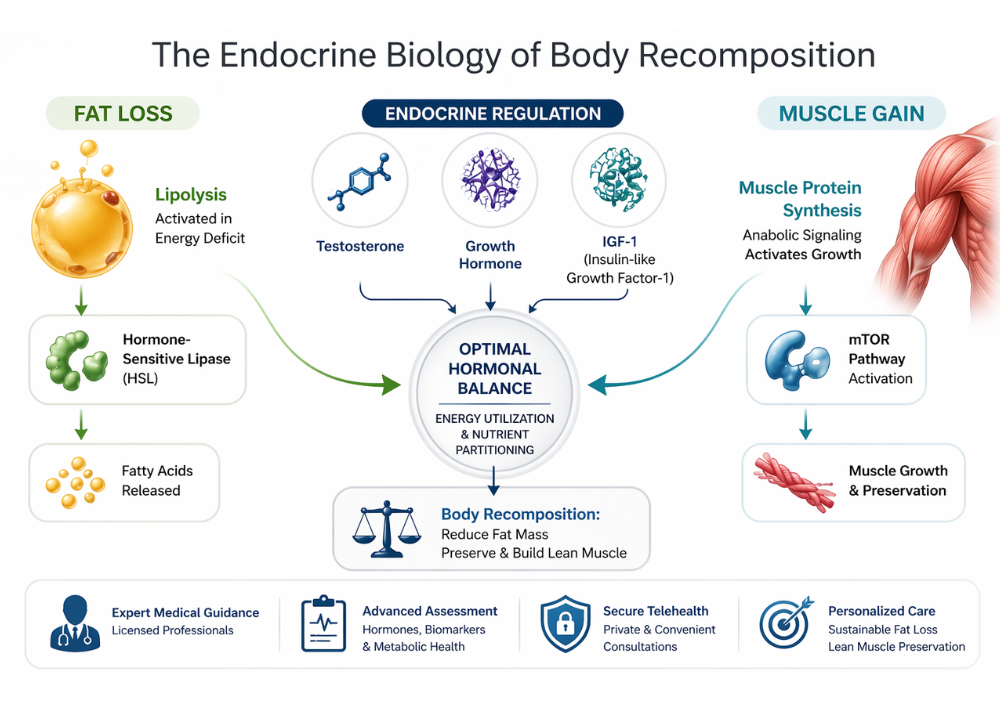
It is important to regulate the fat loss and muscle-building processes using hormones since fat breakdown and muscle production are biological processes regulated by hormones using endocrine systems regulating energy expenditure and metabolism. Hormone-sensitive lipases trigger the fat breakdown process when there is insufficient caloric intake through enzymes. On the other hand, muscle production is managed by anabolic hormones such as testosterone, growth hormones, and insulin-like growth factor-1. Simply reducing caloric intake will probably lead to fat and muscle tissue loss at the same time without the use of hormones [1].
At EmbraceRx, metabolic treatment therapies will be performed by licensed physicians who will assess the endocrine markers and hormones relative to the patient's metabolic function. Clinical practices are used to determine the most effective means of ensuring fat loss while retaining muscles instead of simply losing weight.
How Does Energy Homeostasis Affect Fat Loss and Muscle Maintenance?
Energy balance dictates the mobilization or retention of energy storage, whereas fat loss relies on the physiological state governing substrate metabolism and protein catabolism. Calorie restriction induces fat mobilization via lipolysis, which involves lipases, including hormone-sensitive lipase, leading to elevated free fatty acid release. Yet, in the absence of sufficient anabolic signaling, such a condition also triggers protein degradation in skeletal muscle [2].
On the cellular level, energy restriction results in altered AMPK and mTOR signaling. These two signaling cascades control the equilibrium of energy generation and protein biosynthesis in muscle cells. If anabolic mechanisms persist despite calorie restriction, then muscle mass will be preserved by increasing the contribution of fat oxidation to energy production.
Metabolic responses during energy restriction include the following:
- Induction of lipolysis in adipose tissue
- Release of free fatty acids for oxidative phosphorylation in mitochondria
- Upregulation of AMPK signaling enhances energy production
- mTOR signaling regulates muscle protein turnover
This provides insight into the reason why patients with balanced hormonal regulation are able to retain their muscle mass better than patients with defective metabolic signaling during fat loss.
Why Is Skeletal Muscle Significant for Metabolism?
One of the most metabolically active types of tissues in humans is skeletal muscle. Skeletal muscle is important in the control of glucose uptake, energy expenditure, and metabolic efficiency. Skeletal muscle tissue serves as one of the main tissues where glucose is cleared by insulin signaling, thus regulating glucose levels in the bloodstream [3].
Furthermore, muscle tissues are known for their significant contribution to metabolism because they participate in vital metabolic processes, such as glucose uptake through insulin-sensitive transporters, oxidative breakdown of fatty acids, glycogen synthesis, and metabolic flexibility. Thus, preserving muscle mass is crucial for maintaining metabolic balance when losing weight.
How Do Hormones Impact Nutrient Distribution?
Nutrient partitioning is the distribution of nutrients for energy storage or tissue synthesis by the body. Hormones serve as signals that control the distribution of nutrients towards fat storage or muscle protein synthesis [4]. Insulin controls glucose absorption and glycogen storage, while hormones such as testosterone and growth hormones control anabolic metabolism, leading to muscle protein synthesis. The following hormonal pathways affect nutrient partitioning:
- The insulin pathway that controls glucose and glycogen storage
- The testosterone pathway that stimulates muscle protein synthesis
- Growth hormone and fat metabolism
- Metabolic rate controlled by thyroid hormones
Hormonal signaling plays a role in determining whether the metabolic adaptations will promote fat storage or lean muscle mass. If the hormonal pathways are regulated, nutrients will be utilized effectively to build lean muscle mass rather than being stored as fat.
What Role Does Protein Metabolism Play in the Process of Body Recomposition?
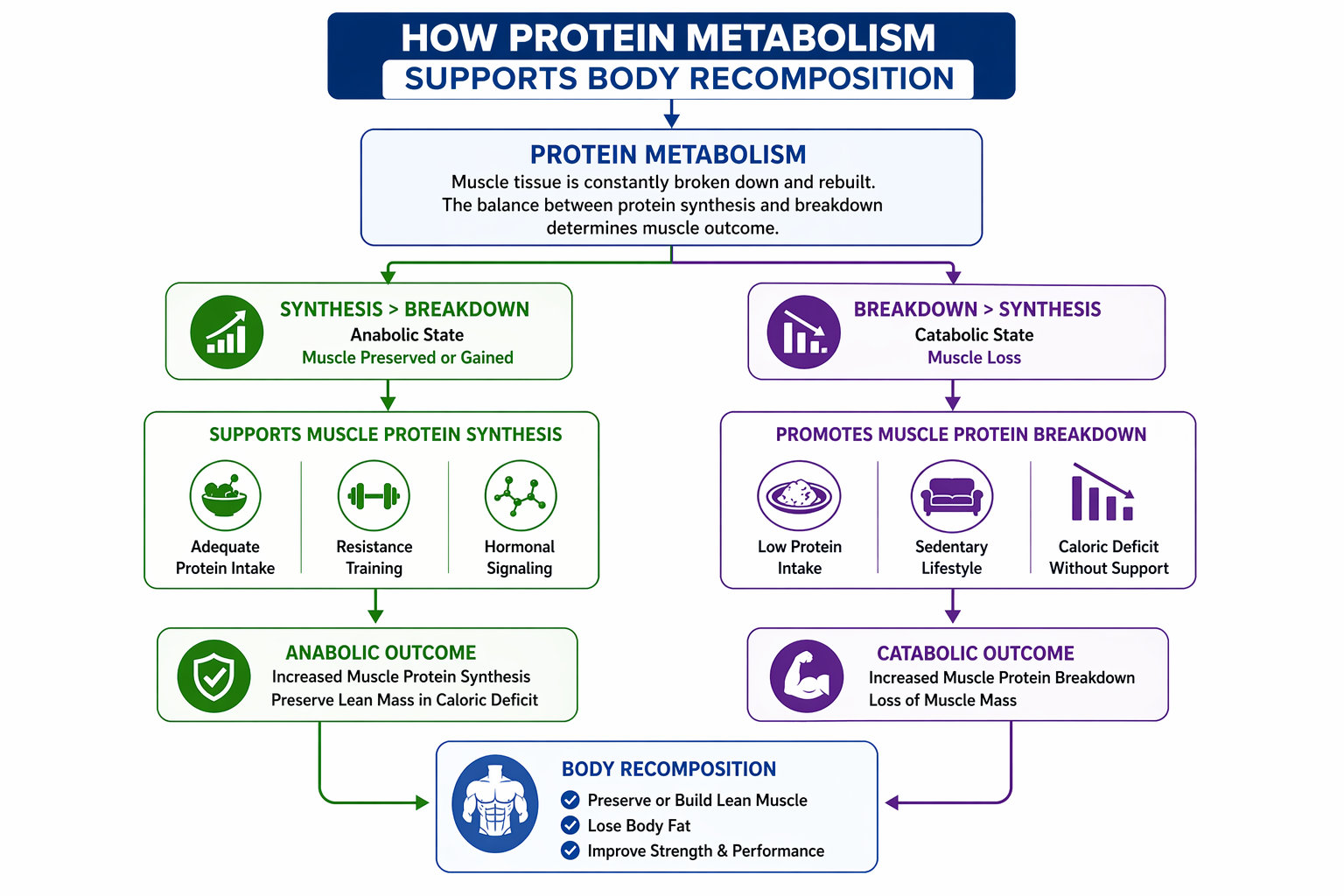
Protein metabolism plays an essential role in ensuring the maintenance of muscle mass when losing fats as muscles experience a continuous process of synthesis and breakdown of proteins. In case the synthesis of proteins in the body exceeds its breakdown, the muscle mass remains unchanged or increases; otherwise, muscles begin to be broken down [5].
Dietary intake of protein and certain hormonal signals initiate the activation of anabolic mechanisms of the body, such as mTOR, responsible for the synthesis of proteins of muscle fibers. The additional impact on muscles made during strength training results in increased demand and synthesis of proteins.
The physiologic determinants that contribute to protein synthesis in muscles include adequate intake of amino acids in the diet, regular resistance training, activity of growth hormone and insulin-like growth factor-1 (IGF-1), and presence of testosterone.
Mechanistic Conclusion: Why Body Composition Requires Hormonal Balance
Body composition involves intricate endocrine and metabolic processes responsible for energy metabolism, nutrient distribution, and cellular metabolism. Insulin, testosterone, growth hormones, and thyroid hormones are among the hormones that determine the body’s tendency toward fat accumulation or muscle retention.
The hormonal processes involved in metabolism interact collectively, necessitating the simultaneous management of several physiological processes when seeking optimal body composition. This makes metabolic medicine involve the assessment of endocrine function and metabolic markers.
Evidence-Based Care at EmbraceRx
Patients are often exposed to generalized weight-loss strategies that focus only on calorie reduction without addressing the hormonal and metabolic factors that regulate body composition. Such approaches may lead to inconsistent results, including loss of lean muscle mass and reduced metabolic efficiency.
At EmbraceRx, our trained medical practitioners assess metabolic markers, hormone balances, and patient health background through safe telehealth appointments. Our approach is scientifically tested to facilitate fat burning while retaining lean mass. Individuals interested in receiving scientifically proven metabolic care services can reach out to our medical practitioners for more information.
FAQs
Can someone lose fat and build muscle at the same time?
Yes, burning fat and building muscle at once is biologically possible if there are factors such as nutrition, anaerobic exercises, and hormonal balance to favor the process of anabolism. The process of body recomposition takes place when muscle protein synthesis outweighs catabolism even as body fat is burned for energy.
Why does muscle matter in managing weight?
Muscle tissue boosts resting metabolic rate and enhances insulin sensitivity. With the body having to expend energy to maintain its muscle tissues, people with high amounts of muscle tissue will expend more calories even at rest.
Does hormonal balance play a role in body recomposition?
Yes. The body’s endocrine system controls metabolic processes and energy usage through insulin, testosterone, growth hormones, and thyroid hormones. These hormones have an impact on how nutrients get stored as body fat or utilized by muscles.
Can metabolic biomarkers affect body composition strategies?
Yes. The presence of insulin, glucose metabolic parameters, and hormone concentrations in biological samples gives clinicians insight into their metabolic processes. They can use these parameters to diagnose and understand if hormones or metabolic factors are affecting body recomposition results.
References
- Wolfe RR. The underappreciated role of muscle in health and disease. American Journal of Clinical Nutrition. 2006;84(3):475-482.
- Hall KD, Guo J. Obesity energetics: body weight regulation and the effects of diet composition. Gastroenterology. 2017;152(7):1718-1727.
- DeFronzo RA, Tripathy D. Skeletal muscle insulin resistance in type 2 diabetes. Diabetes Care. 2009;32(Suppl 2):S157-S163. doi:10.2337/dc09-S302
- Speakman JR, Mitchell SE. Caloric restriction. Mol Aspects Med. 2011;32(3):159-221.
- Phillips SM. Nutritional supplements in support of resistance exercise to counter age-related sarcopenia. Advances in Nutrition. 2015;6(4):452-460.